日期:2026-07-15 浏览:134作者:UoM China Centre

In today’s fast-changing global market, brands face a persistent dilemma: how to expand into new markets without diluting the identity and values that made them successful in the first place. This question was at the heart of the University of Manchester China Centre’s latest industry talk, where cross-border brand strategist David Ries and branding expert Joey Zhao shared real-world insights on global expansion, localisation, and marketing effectiveness.

Opening his keynote, David Ries challenged a common misconception: marketing is often reduced to promotion or advertising. In reality, he argued, marketing is every moment of interaction between a brand and its consumers, structured through the classic 5 Ps of Marketing: Product, Price, Place, Promotion, and People.
His core message was simple but powerful:if any one of the 5 Ps fails to align with the local market, a brand is leaving value on the table.
To illustrate this, Ries pointed to successful localisation strategies such as Decathlon’s expansion model in China. Rather than simply exporting a global playbook, Decathlon systematically adapted across all five dimensions:
This approach, he emphasised, is not accidental “global strategy,” but disciplined execution enabled by strong management systems that allow local adaptation.
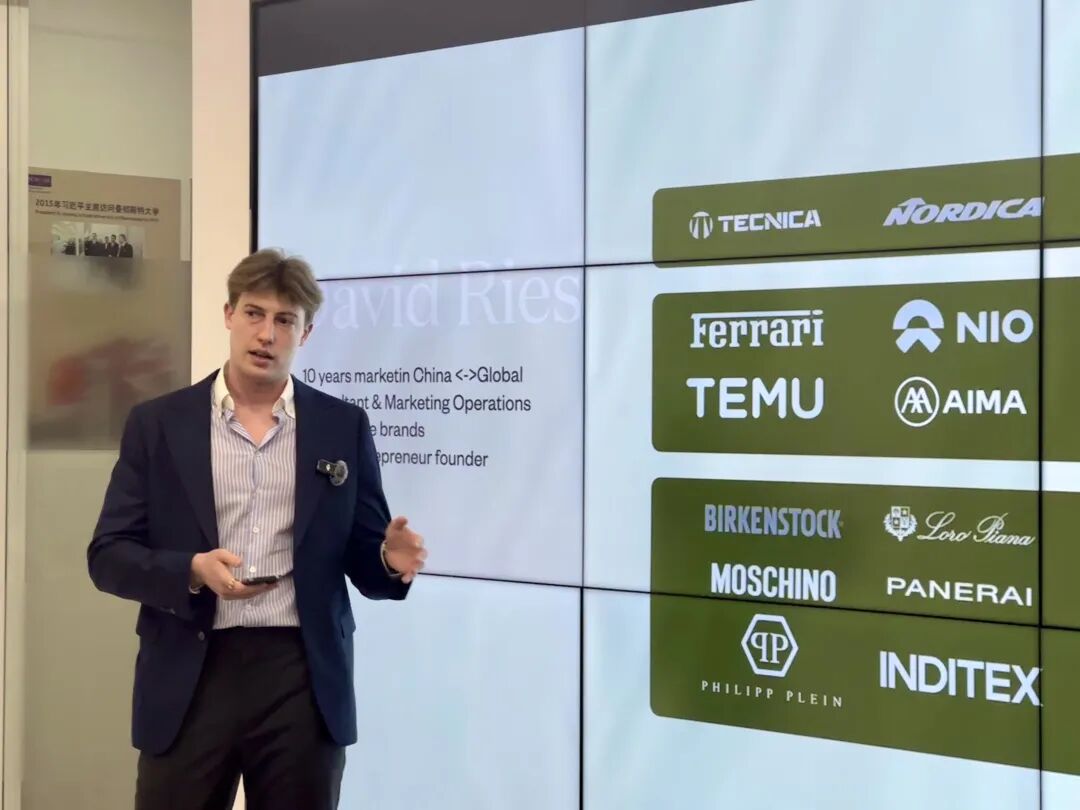
A central theme of the talk was the danger of over-standardisation. Many international brands, Ries noted, fall into the trap of assuming that what works in one market can simply be replicated elsewhere.
In China, this assumption often fails.
Instead, success depends on a more nuanced approach: balancing global heritage with local relevance. While heritage, craftsmanship, and brand legacy may form the foundation globally, they do not automatically translate into meaningful emotional connections with Chinese consumers. Local resonance often comes from themes such as wellness, sustainability, and freedom of lifestyle expression.
The key shift, Ries argued, is moving from “brand messaging for the world” to brand messaging for people in context.
Lesson 1: Local Adaptation Is Not Optional
One of the strongest takeaways was that successful international brands actively decentralise decision-making.
To win in new markets:
Without this flexibility, even strong global brands struggle to stay relevant in fast-evolving markets like China.
Lesson 2: Mass First, Then Precision
Ries highlighted that many brands misinterpret digital maturity as a signal to over-segment too early. Instead, he advocated for a “mass-first” approach to build awareness before refining targeting and messaging.
This is particularly relevant in China’s fragmented but highly digital ecosystem, where platform behaviour, consumer communities, and purchasing cycles evolve quickly.
Lesson 3: Don’t Lose Track of the 5 Ps
Despite the temptation to over-focus on digital promotion or influencer marketing, Ries warned against neglecting the fundamentals.
Strong brands:
As he summarised, “good marketing is discipline, not just creativity.”
The session also included examples of global campaigns and market activations, including AI-driven outdoor advertising and integrated global campaigns such as Haier’s international brand work. These examples reinforced a key point: modern brand building is no longer linear—it is multi-channel, data-informed, and culturally adaptive.
 |
||||
|
David Ries Co-founder, Spark Collective |
||||
|
 |
||||
|
Joey Zhao NewStudios Group, VP Mancehster Global MBA Alumna |
||||
|
Following the keynote, an engaging Q&A session moderated by Thomson Tang, Senior Marketing Officer, at the UoM China Centre, explored how brands, creators, and young professionals are navigating today’s rapidly evolving global marketing landscape.
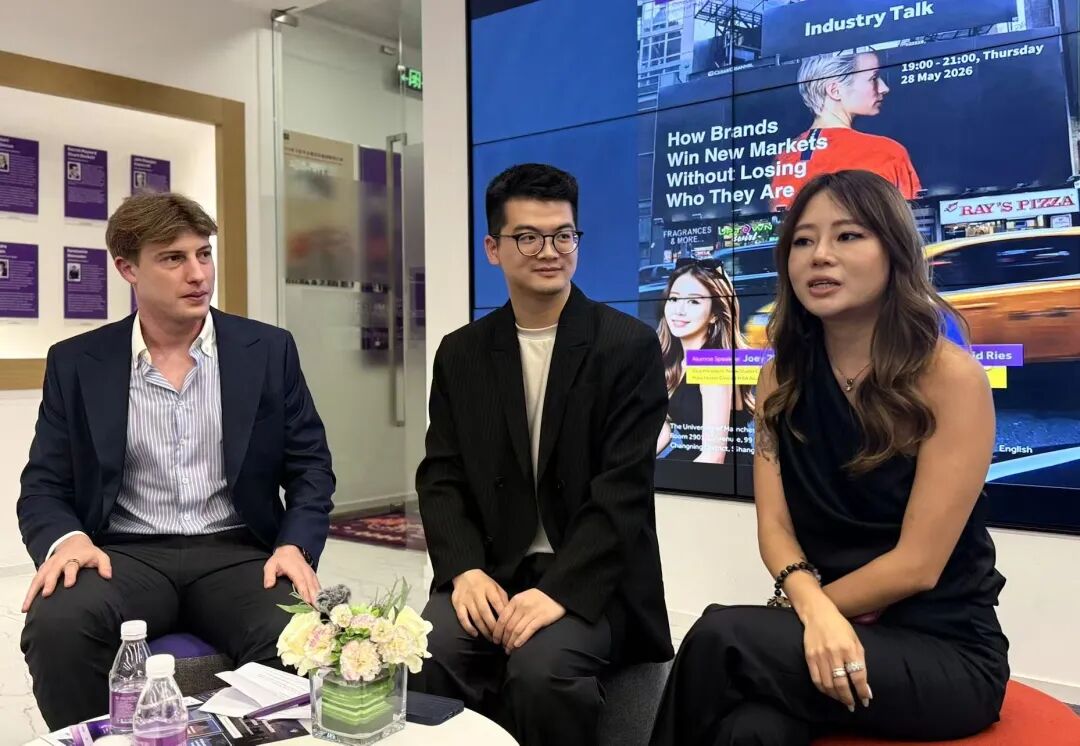
“Think Twice Before Internationalising”
When discussing the challenges of global expansion, David Ries emphasised that internationalisation is far more demanding than many brands assume.
According to him, successful global brands must first establish a strong internal foundation:
Without this clarity, brands risk losing their identity as they scale internationally.
David candidly advised brand managers to “think twice before deciding to internationalise,” noting that many companies underestimate the complexity of entering new markets.
From Consultant to Founder: A Different Perspective
Reflecting on the launch of his own ready-to-drink brand, Langhua, David shared that becoming a founder fundamentally changed his perspective on marketing.
Compared with large corporate consulting projects, entrepreneurship brought him closer to consumers and made marketing feel more immediate, experimental, and enjoyable.
He also joked that consultants often play “multiple roles” depending on the client relationship — from strategist to teacher, babysitter, or even “ayi.”
AI, Short Videos and the Creator Economy
Joey Zhao discussed how AI and creator-driven platforms are transforming modern marketing.
In her view, creators are the “messengers” connecting brands with audiences, while AI has become a powerful production and efficiency tool.
She highlighted how Chinese AI technologies and short-video ecosystems are rapidly changing content production, making high-quality campaigns more accessible and scalable for brands.
At the same time, she stressed that localisation today goes far beyond translation:brands must understand how audiences consume culture, lifestyle, and social interaction digitally.
Why Storytelling Still Matters Most
When asked what matters most for companies entering new markets with limited budgets — storytelling, local partnerships, or performance marketing, David argued that storytelling remains the foundation of everything else.
Without a compelling story:
As he explained, “If your original message isn’t strong, there’s no point amplifying it.”
Do Consumers Trust Influencers More Than Brands?
Joey Zhao acknowledged that consumers today often trust influencers more than brands themselves because influencers build long-term emotional connections through lifestyle sharing and personal opinions.
She described platforms such as rednote as powerful “community-driven ecosystems” where consumers are influenced not only by products, but by people they emotionally relate to.
For brands, influencer collaboration therefore works best when it aligns with a strong and authentic brand story.
Advice for Young Professionals
When asked what advice they would give to young professionals hoping to build international careers in branding and marketing, both speakers emphasised curiosity, adaptability, and long-term thinking.
David encouraged young marketers to “find something fun to do,” arguing that passion and enjoyment are essential for sustaining creativity in the industry.
Joey Zhao stressed the importance of understanding cultural differences and learning how to integrate into international environments. She also encouraged young professionals to think strategically about their next three to five years and develop a clear long-term direction.
Audience Discussion: Chinese Brands, FMCG and B2B Marketing
David noted that many international brands underestimated the speed at which Chinese brands would gain consumer trust and market competitiveness. He argued that future success will depend not only on acquiring new consumers, but also on building stronger long-term relationships with existing customers.
The session concluded with a shared consensus:whether B2C or B2B, global or local, successful marketing ultimately comes back to understanding people, building trust, and communicating with authenticity.
The event offered a clear framework for understanding global brand success in 2026 and beyond. In a world where markets are increasingly interconnected yet culturally distinct, the winners will not be those who standardise the fastest—but those who localise intelligently without losing strategic coherence.
For marketers, business leaders, and students alike, the message was clear:global growth is not about choosing between consistency and localisation—it is about mastering both at the same time.




 EN
EN
