日期:2026-10-22 浏览:15作者:UoM China Centre
On 20 October, “When AI Becomes a Partner: Redefining Value in Human–AI Collaboration” AI seminar was successfully held in Shanghai, jointly hosted by The University of Manchester China Centre and the AI & WebX Association of the Peking University Shanghai Alumni Association.
The event was supported by the Changning Overseas Friendship Association, Shanghai Overseas Returned Scholars Association(SORSA), SORSA Changning Branch. Co-organisers included SORSA UoM Alumni Association, East Hongqiao International Innovation Centre for Young Professionals, and Shanghai Xuhui District Science Technology Innovation and Entrepreneurship Association. The event also received generous support from the Bank of China Shanghai Changning Sub-branch, Select Property, and Kangshifu.
More than 190 alumni and guests from The University of Manchester, Peking University and other institutions registered for the event. Distinguished attendees included Xiangdong Mao, Vice President of the Shanghai Overseas Returned Scholars Association and President of UK Branch; Yao Lü, Vice Secretary-General of Changning Overseas Friendship Association ; Dr Sherry Fu, Founding Director of The University of Manchester China Centre; and Shuo Bai, President of the AI & WebX Association of the Peking University Shanghai Alumni Association.
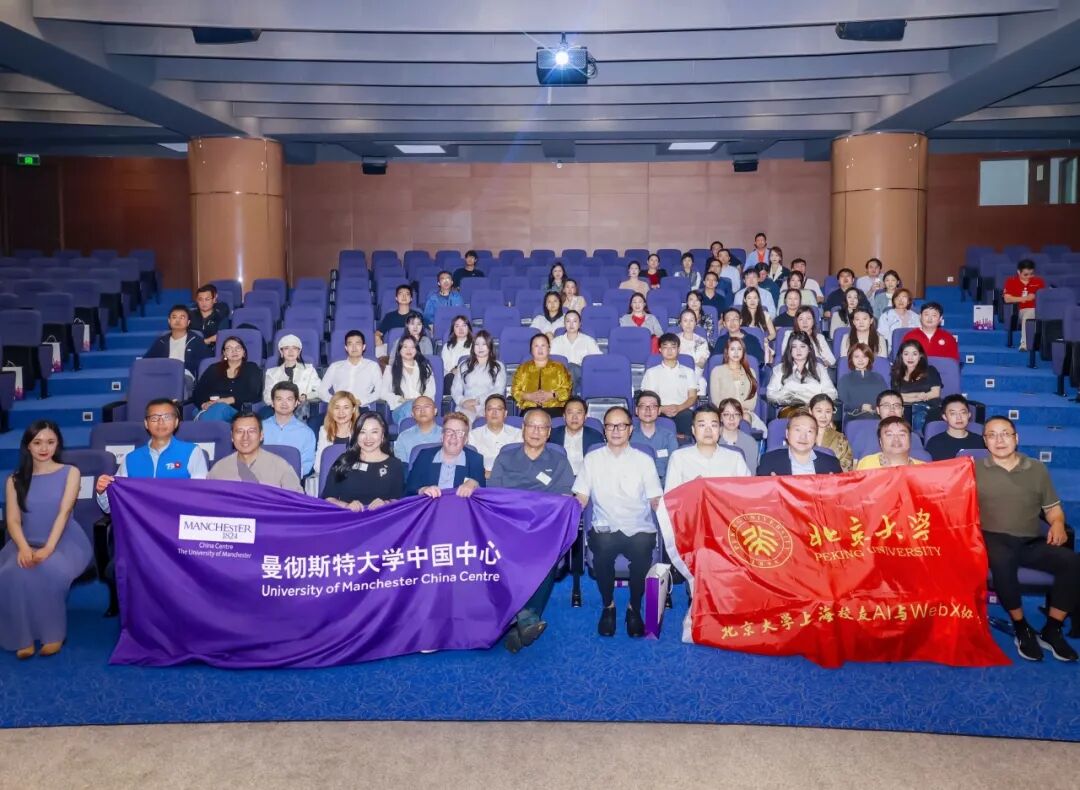
This marked the fourth consecutive year that the China Centre has hosted an AI seminar, and the first time alumni communities from The University of Manchester and Peking University had joined forces to explore the future of artificial intelligence.
In her opening remarks, Dr Sherry Fu, Founding Director of The University of Manchester China Centre, reflected on the Centre’s 18-year journey. Over the years, the Centre has not only brought the University’s educational excellence to China but has also remained committed to connecting and empowering its alumni community. The University of Manchester now has nearly 60,000 alumni across China, while the University’s alumni association in Shanghai has become a welcoming home for local graduates.
Sherry also highlighted Manchester’s pioneering legacy in computing. In 1948, The Baby, the world’s first stored-program electronic computer, was developed at The University of Manchester. In 1950, Alan Turing, then working at the University, published his landmark paper Computing Machinery and Intelligence, introducing what would become known as the Turing Test.
Artificial intelligence, she noted, is deeply rooted in the University’s history. Since 2023, the China Centre has organised annual AI seminars and established its AI+ Alumni Club. This year, the participation of the Peking University Shanghai Alumni Association has further broadened the academic perspectives and opportunities for cross-university exchange.
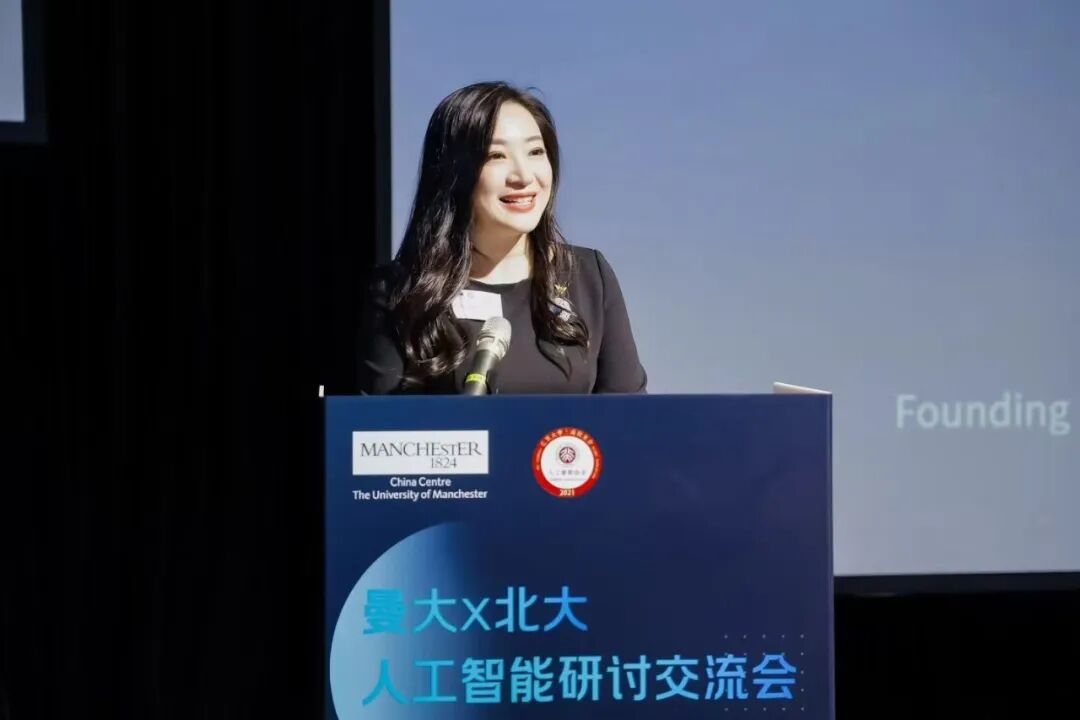
Dr Sherry Fu, Founding Director of The University of Manchester China Centre
Dr Shuo Bai, President of the AI & WebX Association of the Peking University Shanghai Alumni Association,Ph.D. Supervisor of Institute of Computing Technology, Chinese Academy of Sciences Executive Committee Member, Technical Committee on Digital Finance, China Computer Federation, delivered his remarks around four key themes: welcome, gratitude, tribute and anticipation, expressing his appreciation to all those who had gathered for the occasion.
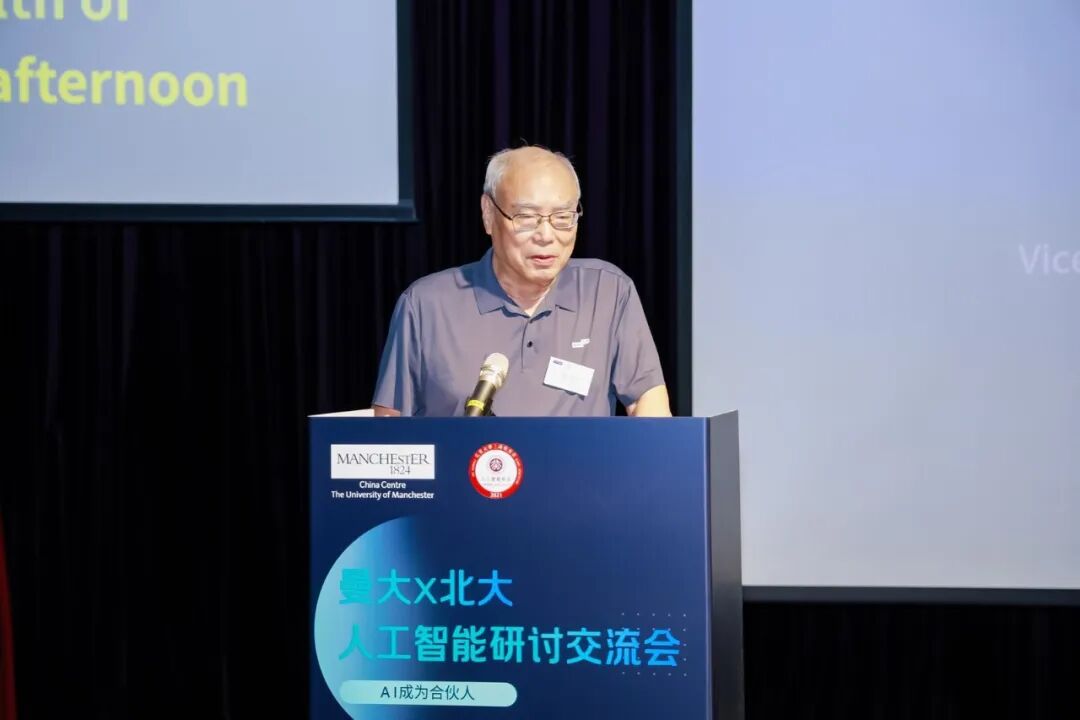
Dr Shuo Bai, President of the AI & WebX Association of the Peking University Shanghai Alumni Association
Xiangdong Mao, Vice President of the Shanghai Overseas Returned Scholars Association and President of UK Branch, observed that artificial intelligence, as a driving force behind a new industrial revolution, is fundamentally reshaping human–machine relationships and the future of education. He emphasised the important role of UK-educated Chinese alumni in connecting China and the world and bringing together diverse perspectives and expertise.
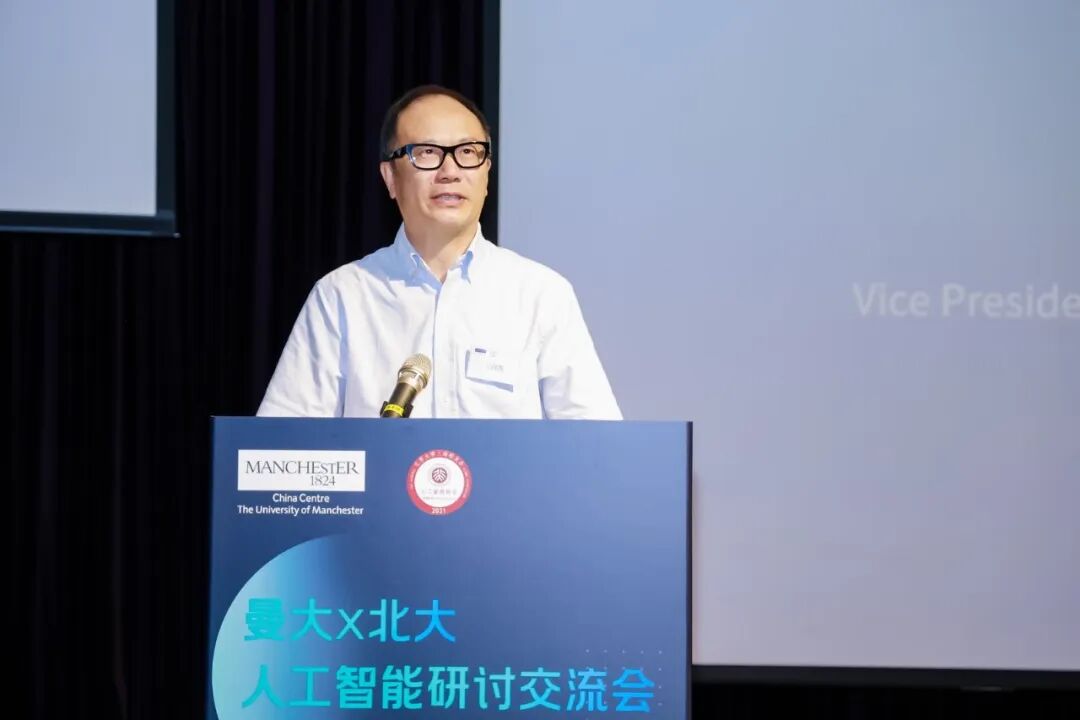
Xiangdong Mao, Vice President of the Shanghai Overseas Returned Scholars Association and President of UK Branch
Professor Kenneth McPhail, Head of Alliance Manchester Business School and Fellow of the Academy of Social Sciences, delivered a keynote address exploring the human advantage in an AI-driven world.
He argued that the challenges posed by AI will fundamentally reshape our understanding of what it means to be human and the mission of higher education. Rather than avoiding these questions, business schools should work alongside businesses and students to explore them.
Drawing on a five-year, £5 million strategic partnership between Alliance Manchester Business School and the Bank of New York, Professor McPhail illustrated a new model of human-first AI research and talent development. He also outlined five research priorities for building organisational capabilities in the age of AI, including how to improve efficiency while preserving human learning and judgement, ensuring meaningful human involvement in governance, and addressing the challenges posed by adaptive systems.
He emphasised that the fundamental question is not simply what answers AI can provide, but how humans can retain their ability to ask meaningful questions and exercise sound judgement.
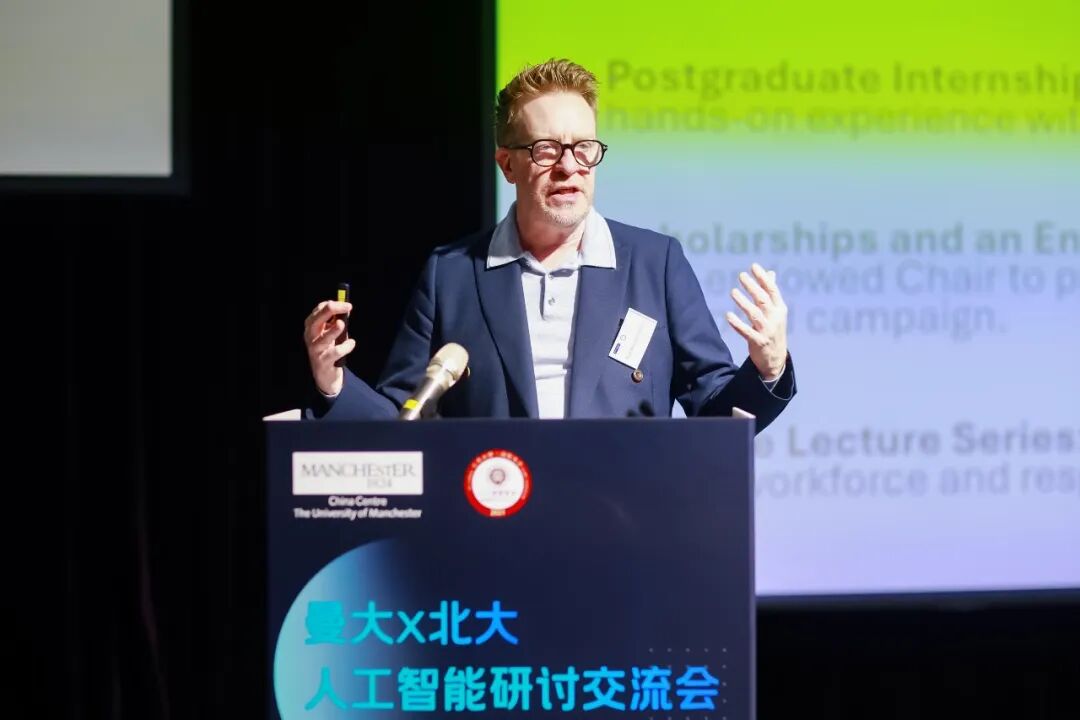
Professor Kenneth McPhail, Head of Alliance Manchester Business School
Dr Lin Li, Executive Deputy Director of the Research Committee of the China Banking Association and a recipient of Shanghai’s Leading Talent Award, examined the transformation of value through the lens of the financial sector.
Comparing the diffusion of AI with the century-long spread of the steam engine during the Industrial Revolution, Dr Li described the current AI revolution as a process of “dual-chain diffusion” and “three-layer diffusion”. Beyond creating entirely new industries, AI is reshaping traditional sectors and changing how resources such as electricity and computing power are valued.
He also highlighted the renewed importance of pricing and monetisation models in the AI era. The fact that token costs can sometimes exceed the price of a cup of coffee, he explained, reflects a new manifestation of Jevons’ paradox, whereby greater efficiency can lead to increased overall consumption.
In an environment defined by uncertainty, Dr Li encouraged both organisations and individuals to adopt what he called “Darwinian composure”: rather than striving to be the strongest or smartest, the priority should be to become the most adaptable. His advice was to move forward through small, iterative steps, even when the future direction remains unclear.
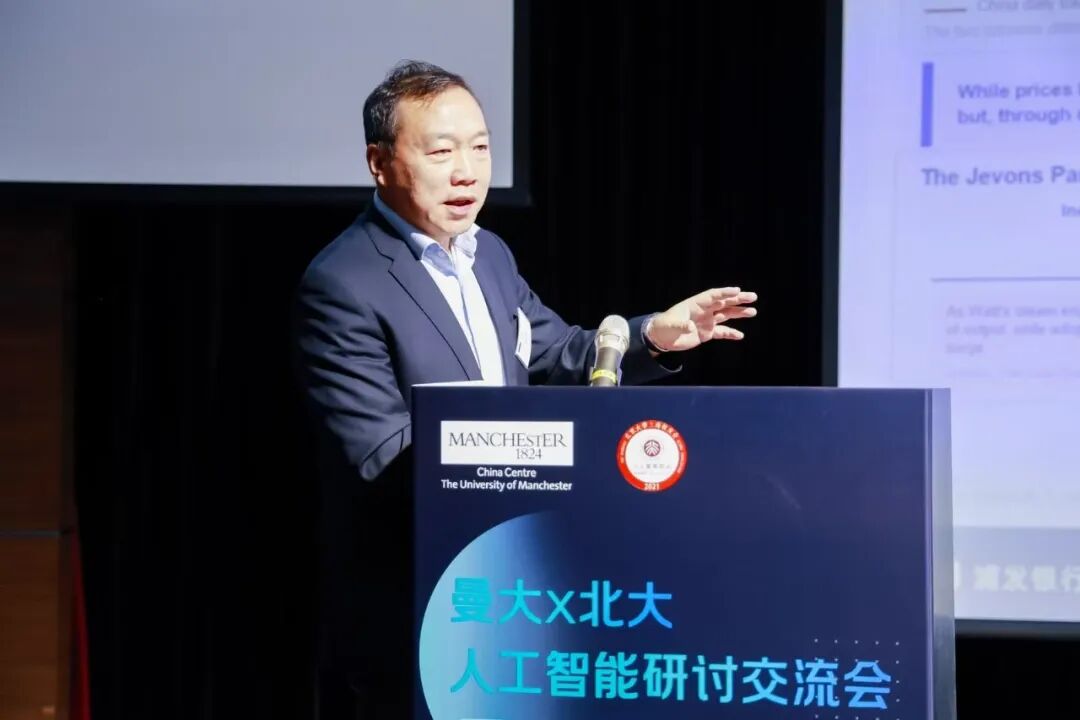
Dr Lin Li, Executive Deputy Director of the Research Committee of the China Banking Association
Moderated by Yiqi Zhu, a University of Manchester alumnus and council member of the Changning Branch of the Shanghai Overseas Returned Scholars Association, the roundtable brought together five entrepreneurs and industry leaders to discuss how AI is transforming industries and how organisations can respond.
The panellists were:
The discussion explored both the immediate challenges facing the industry, including underutilised computing resources and data governance, and emerging trends such as the agentic internet.
Despite their diverse perspectives, the panellists shared a common conclusion: AI will not replace people simply because of the technology itself; rather, those who cannot adapt to working with AI risk being left behind. Lifelong learning and the continuous development of one’s knowledge and judgement are essential to staying relevant in a rapidly evolving world.
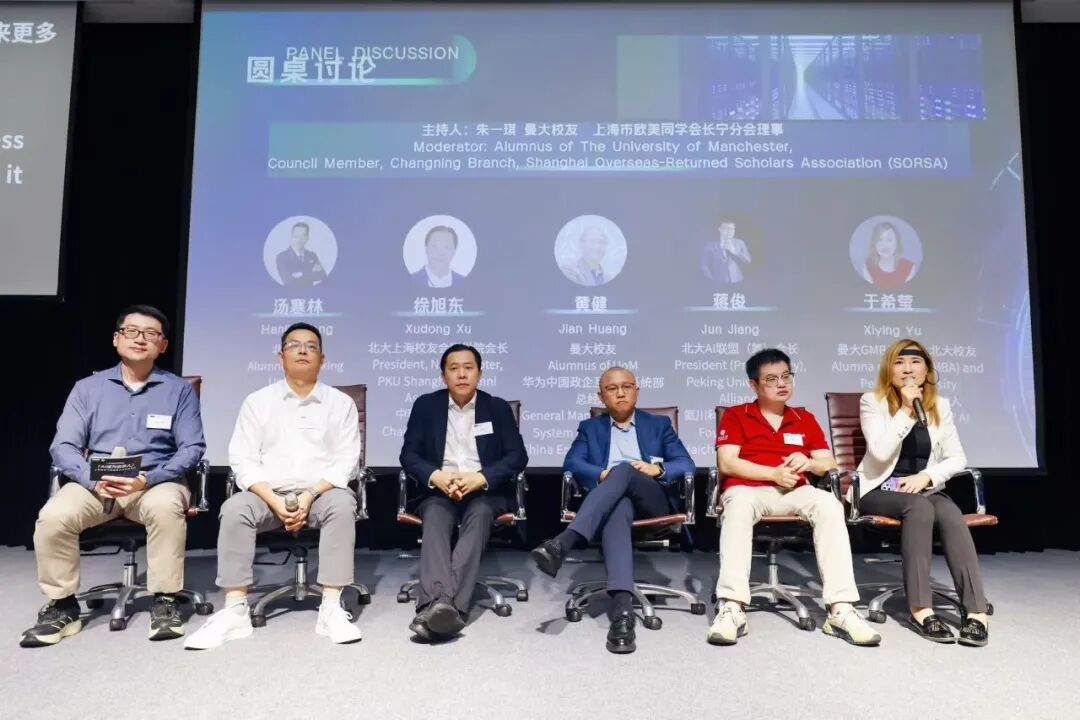
Roundtable discussion
An important ceremony was also held during the event, during which Dr Sherry Fu, Director of The University of Manchester China Centre, and Dr Bai Shuo, President of the AI and WebX Association of the Peking University Shanghai Alumni Association, exchanged certificates of friendship and cooperation. Professor Kenneth McPhail, Dr Lin Li, and Secretary-General Zhixiang Lü joined them on stage to witness the occasion and pose for a commemorative photo. The ceremony marked an important milestone in collaboration between the two universities’ alumni organisations in the field of artificial intelligence.
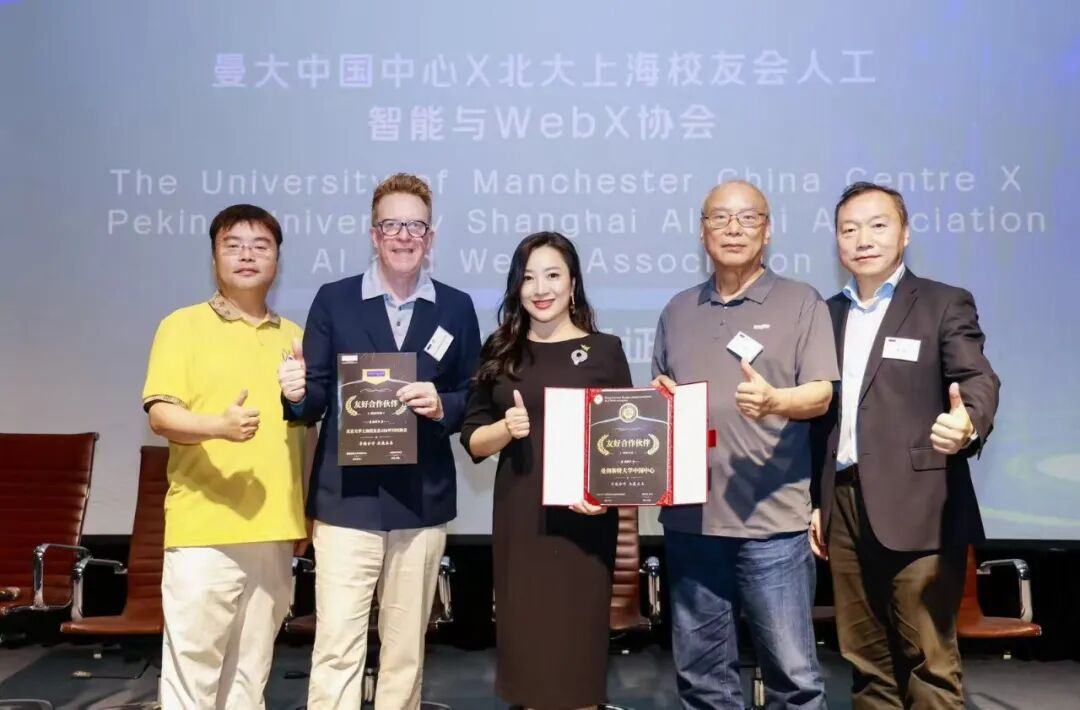
In her closing remarks, Dr Sherry Fu reflected on the significance of the first AI forum jointly organised by The University of Manchester China Centre and the Peking University Shanghai Alumni Association. Bringing together the alumni communities of two leading universities, she noted, was a meaningful step towards fostering cross-disciplinary dialogue and collaboration.
As AI continues to transform industries and society, she emphasised that “lifelong learning is the foundation of our ability to thrive.”
Looking ahead, The University of Manchester China Centre will continue to serve as a bridge connecting academia, industry and alumni communities. Drawing on the University’s longstanding contributions to AI and its extensive global alumni network, the Centre will work with Peking University and other partners to deliver more meaningful cross-sector initiatives, advance leadership in human–AI collaboration, and explore how value can be redefined in the age of AI.



 EN