日期:2026-10-22 浏览:14作者:UoM China Centre

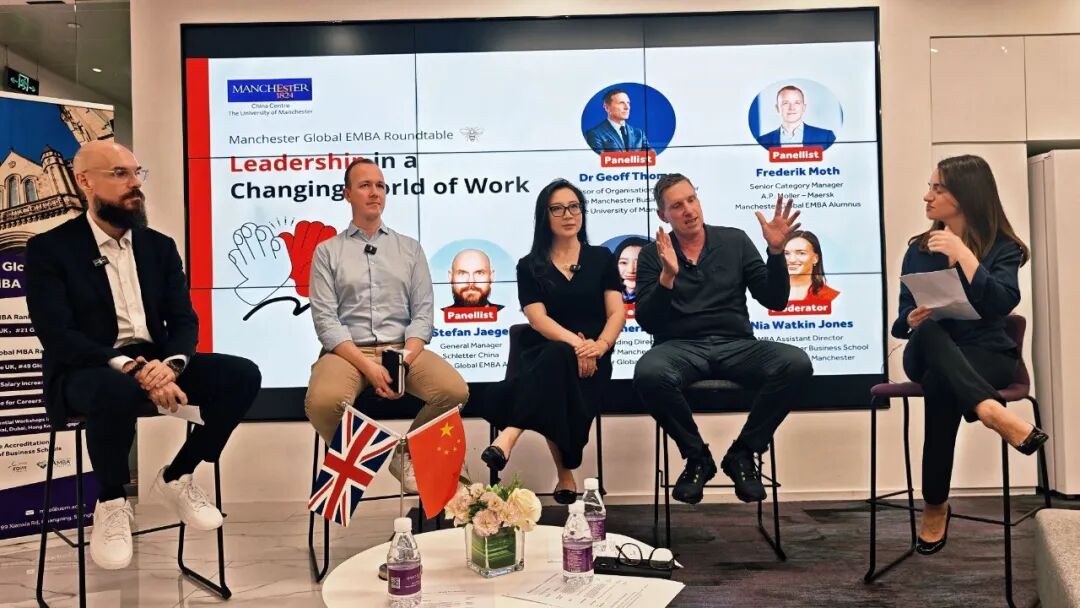
With remote and hybrid working, the rise of AI, multi-generational teams, and reconfigured global supply chains, today's managers face a workplace that is changing faster than ever. On the evening of 12 October, the University of Manchester China Centre hosted a Manchester Global EMBA Roundtable on leadership in a changing world of work, bringing together academic insight and front-line leadership practice.
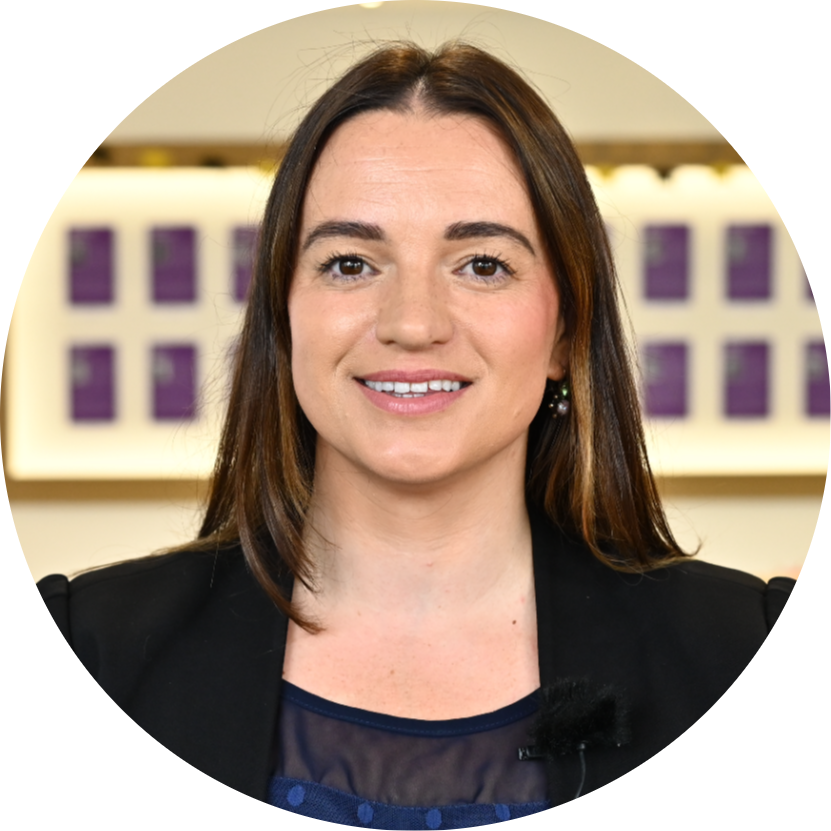
Dr Geoff Thomas, Professor of Organisational Behaviour at Alliance Manchester Business School, joined three Manchester Global EMBA alumni — Frederik Moth, Senior Category Manager at A.P. Moller – Maersk, Stefan Jaeger, General Manager of Schletter China, and Dr Sherry Fu, Founding Director of the UoM China Centre — for a panel moderated by Nia Watkin Jones, MBA Assistant Director.
Asked which force has reshaped leadership most over the past five years, Geoff's answer was: hybrid working has changed the present; AI will change the future. "COVID was, in many ways, an amazing social experiment — it turned remote working from a privilege of a few industries into a reality every organisation had to face." AI's transformation of the employer–employee relationship, he argued, is only just beginning.
Frederik brought the Maersk perspective: during the pandemic, office staff went fully remote — "you could move anywhere in the world." The flip side: keeping a team scattered across Asia engaged over Teams alone was a huge leadership challenge. Now that Maersk has announced a full return to office from 1 January, a new question emerges — "when competitors still offer flexibility, how do we create an environment people want to come back to, five days a week?"
Stefan added a meta-view: these forces never happen in isolation — supply chain shocks and market swings piled on top. And from manufacturing, he flagged an often-overlooked dimension: fairness. "Blue-collar colleagues on the production line cannot work remotely. Hybrid policy is also a question of justice — it demands transparent rules and honest communication."
Dr Sherry Fu drew on her postdoctoral research at Berkeley, a case study of Google's hybrid model: there is no one-size-fits-all answer — the manager's key role is structural design that makes hybrid work actually work.
On the gap between how organisations talk about developing leaders and what actually changes behaviour, Geoff was clear: they focus too much on the programme itself. "The biggest challenge is impact — transferring learning back to the job. But we don't learn best in classrooms: 70% of learning comes from stretch experiences on the job, 20% from other people and networks, and only 10% from structured programmes. Focus only on the programme and you miss 90% of people's learning."
"Don't just rely on the programme. Build developmental relationships, and actively seek out the challenges that push you out of your comfort zone." — Dr Geoff Thomas
A good MBA, he noted, fits neatly into this model: the classroom provides foundations, the peer network provides support and challenge, and assignments are designed as stretch experiences — many of his students take the engagement solutions they write about straight back into their own teams.
 |
||||
|
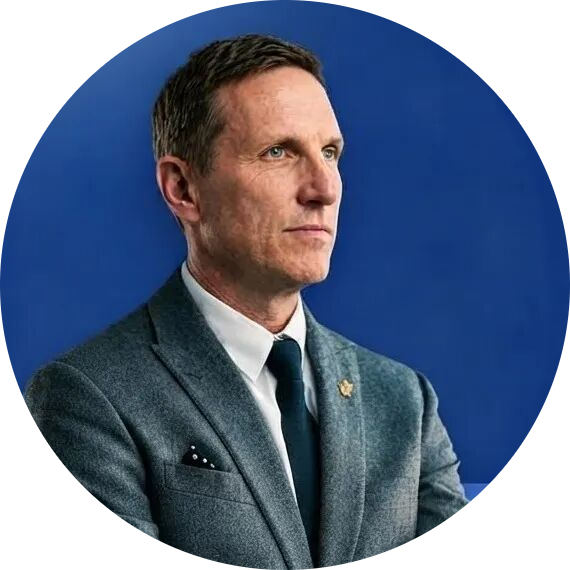
Dr. Geoff Thomas |
||||
|
Frederik shared first-hand experience of transformation at Maersk, which operates some 700 container vessels — each returning to a shipyard roughly every five years for a 30-day repair, backed by repair quotations of more than 8,000 lines. When asked, "How do we use AI to be more efficient?", his reply: "Efficient at what? Define the problem first."
His framework has three parts: focus on the problem; focus on the people: from front line to senior level, many are terrified of AI, including a student assistant worried that "by the time I graduate, AI will have taken all the good jobs"; and leadership presence: transformation is not a decree but leaders actively sitting on steering committees, following the rollout and reviewing with teams what works and what doesn't.
 |
||||
|
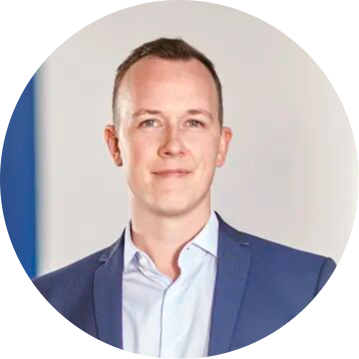
Frederik Moth Senior Category Manager A.P. Moller – Maersk Manchester Global EMBA Alumnus |
||||
|
Dr Sherry Fu brought a unique dual perspective: she brought Manchester education to China 18 years ago, building the Centre from a one-person operation to a community of over 3,000 alumni — and in 2014, she sat the GEMBA journey herself. "I had been running the Centre for six years, and I told myself: if you want to take it to the next level, the first thing is to develop yourself."
"What the programme gave me was not knowledge, but a mindset upgrade — from following instructions to thinking strategically and critically: doing the right thing, not just doing things right." — Dr Sherry Fu
GEMBA, she said, taught her how innovation drives business development, and her own learner experience helps her design richer experiences for students — from a Huangpu River night cruise to dialogues with local business leaders, making "learning about China" part of the curriculum beyond the classroom.
 |
||||
|
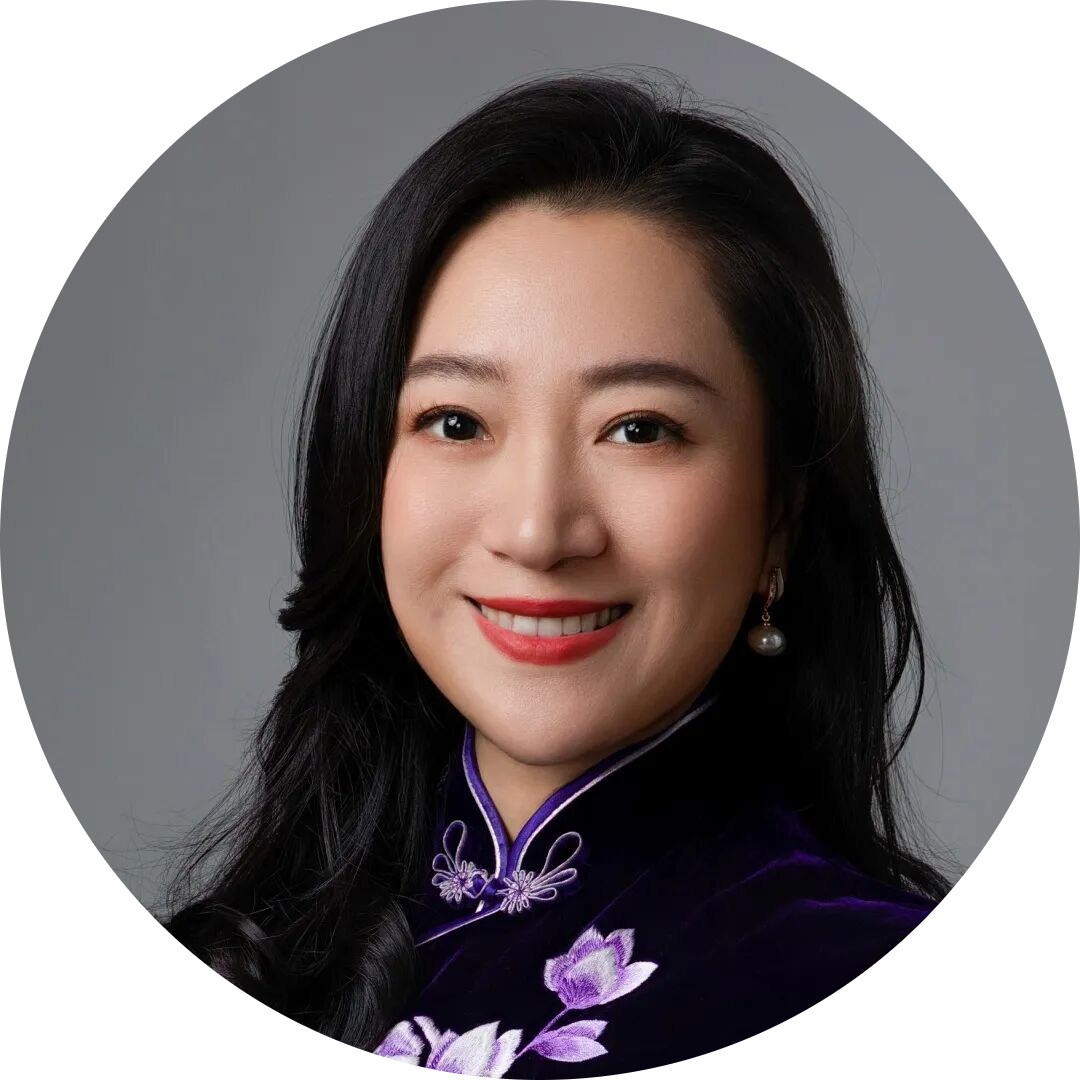
Dr Sherry Fu (FIPA FFA) Founding Director The University of Manchester China Centre Manchester Global EMBA Alumna |
||||
|
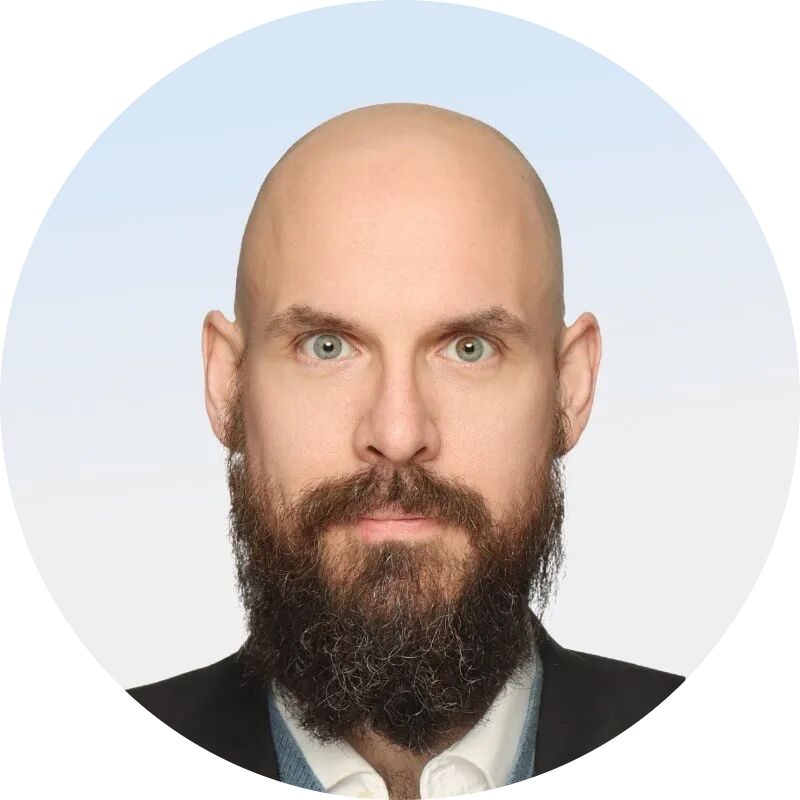
On the hardest leadership call, Stefan was candid: growth and restructuring are manageable — "the other side of the coin", cutting functions, never is, "even when it has nothing to do with individual performance." His answer rests on the three hardest things to sustain: communication, transparency and direction.
"I don't like the 'one North Star' metaphor. I prefer swim lanes. We share the direction, the paths can differ. Sometimes two steps forward, one step back, but we move that way together." — Stefan Jaeger
The real cross-cultural challenge, he argued, is not geographic culture but company silos — teams working in isolation, wary of one another and reluctant to collaborate across functions and borders. Breaking them takes transparency and empathy. On uncertainty: "Don't be a perfectionist; you'll be too late. Take the information you have, let your team come up with proposals, support the decision, move on, and revisit it later." He also stressed the importance of empowering people: rather than having all the answers yourself, enable the team to propose solutions and give them room to learn from their own mistakes. "If the ship stops running when I'm away for a week, I'm not doing my job." His most trusted communication tool? Surprisingly simple: the whiteboard — "a slide is finished; on a whiteboard, people see the process, step by step."
 |
||||
|
Stefan Jaeger General Manager, Schletter China Manchester Global EMBA Alumnus |
||||
|
On the key challenges leaders face when adopting AI, Geoff cited a survey of 63 global CEOs: more than two-thirds of employees do not trust their organisations' use of AI — "a crisis of trust." His three recommendations: involve employees from day one in designing and rolling out AI; be clear that the goal is productivity, not replacement — "so far, AI has replaced tasks, not entire jobs," and a win-win narrative builds trust; and approach AI as job redesign — don't let it take the most engaging parts of people's jobs and leave the tedium behind.
Dr Sherry Fu's answer was simple and powerful: in the age of AI, being a lifelong learner matters more than ever. "Information is one prompt away — the scarcest leadership capability is judgement and critical thinking. And AI cannot replace human connection, just as residential workshops can never be replaced. A leader's job is not to give all the answers, but to ask the right questions." Frederik added a dose of practice: since every office employee received a Copilot licence, he has received plenty of unmistakably AI-written emails ("I have to decode them back into human"); real advantage comes from a decade of building the data and process foundation — "garbage in, garbage out." Stefan distilled it: AI is a tool, not an oracle. "If you hold a hammer, every problem looks like a nail. And on ethics and values — keep AI aside. In the end, people must decide." He applies the same discipline to himself: "When do I put the AI aside? Just like when do I put my phone aside."
The panel closed with one piece of advice each — different in words, strikingly aligned in spirit:
Stefan: Never stop learning — learning is broad: a conversation, a book, or still working on his Chinese. Copy what is good and make it better; when you see bad management, don't become the same bad boss. "Take some risks and make decisions — but never compromise on being a good human being. Everybody has their own bag to carry."
Frederik: Be vulnerable. "Walk into the team and say: I'm not the expert — you are. Tell me how you see this. Challenge the way I think." People don't expect you to know everything; they expect clarity, curiosity and trust.
Sherry: "Keep hungry, keep learning — and enjoy life, be happy every day." She recalled a business school deans' forum discussing how to teach leaders to be happy: "When you are happy, the people around you will be happy."
Geoff: "Your leadership development is too important to leave in the hands of your organisation. Craft your own." Set specific goals, build relationships that give you honest feedback, seek out stretch experiences — and do what managers like least: step back and reflect.
Two audience questions stood out. On generational shift, Geoff's research-based answer surprised many: "The differences are smaller than we think — there is more variation within a generation than between generations." What has genuinely changed: younger generations value meaningful work and organisations' social contribution more, while COVID eroded their early-career resilience and workplace socialisation — one more cost of remote working, which quietly starves informal mentoring. On AI and jobs, Stefan noted, new opportunities are opening up, philosophy and hands-on trades are coming back — "AI cannot unblock your toilet at home." Continuous learning and an open mind remain the passport through uncertainty.
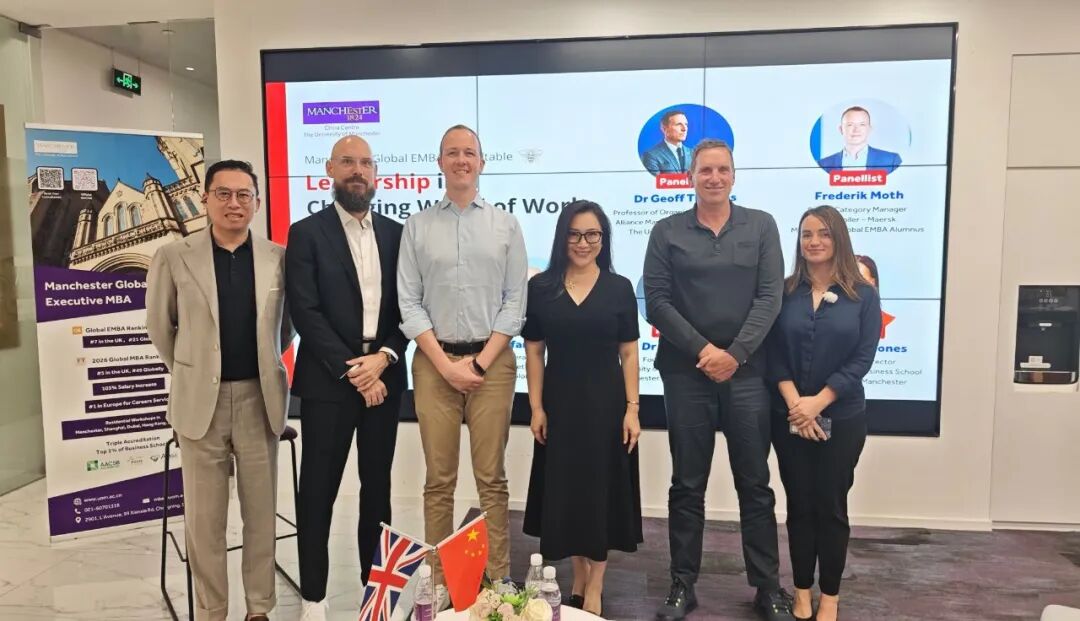
Our sincere thanks to Dr Geoff Thomas, Frederik Moth, Stefan Jaeger and Dr Sherry Fu for their openness and insight, to Nia Watkin Jones for masterfully steering the conversation, and to everyone who joined us for an evening of conversation, shared perspectives and reflection on what it takes to lead through change.
If you are ready to craft your own leadership evolution, discover the Manchester Global EMBA — and join a global community of senior leaders learning together.
Moderator
 |
||||
|
Nia Watkin Jones |
||||
|


 EN

